SEO and AEO: How to Rank in Search and Get Cited by AI
Search Engine Optimization gets you found by people. Answer Engine Optimization gets you named by AI. They are not the same job, and in 2026 you need to win at both. Here is what each one means, why they work together, and exactly how we build it — on your pages and off them.
For twenty years, getting found online meant one thing: ranking on Google. That is still true. But now there is a second front. People also ask ChatGPT, Gemini, Perplexity, and Google's own AI overviews for answers — and those tools name a handful of businesses, not ten blue links.
So the goal has split in two. You still want to rank in search. You also want to be cited by AI. The first job is called SEO. The second is called AEO. At Peachtree Rose Marketing, we treat them as one system, because they feed each other. This page explains the difference in plain terms, then walks through the on-page and off-page work that wins at both.
SEO (Search Engine Optimization) helps you rank in search results like Google. AEO (Answer Engine Optimization) helps AI tools find, trust, and quote your business in their answers. They share a foundation but reward different things: SEO rewards relevance and links; AEO rewards clarity, structure, and proof you are a real authority. You do not pick one. You build both — on your site and across the wider web — and they compound.
What SEO and AEO actually mean
Both are about being found. The difference is where, and who is doing the finding.
- SEO
- Search Engine Optimization — the work that helps your website rank in search engines like Google and Bing. Think keywords, content, links, page speed, and your map listing. The goal is to show up when a person searches.
- AEO
- Answer Engine Optimization — the newer work that helps AI tools like ChatGPT, Gemini, and Google's AI answers find and cite your business. The goal is not just to rank, but to be the source the AI repeats out loud.
Here is the simplest way to hold the two apart. SEO wins you a click: a person sees your link and chooses it. AEO wins you a mention: an AI reads the web, decides who the trustworthy answer is, and says your name — often before the person ever sees a list of links at all.
Why they are different — and why you need both
SEO and AEO sit on the same foundation, but they are judged on different things. Knowing the difference is what keeps you from doing half the work and expecting full results.
Matching what people search, earning links from other sites, fast and healthy pages, and a strong local presence. The prize is a higher spot on the results page.
Plain answers an AI can lift word for word, clean structure it can read, and real-world proof you are who you say you are. The prize is being the cited source.
You need both because the two audiences now sit side by side. A customer might Google "best podcast studio in San Antonio" and scan the map pack — that is SEO. The next customer asks ChatGPT the same question and books whoever it names — that is AEO. Win one and you lose half the room. The good news: the work overlaps more than it competes. Strong SEO gives an AI a healthy, trusted site to read. Strong AEO makes that same site clearer for humans too. Do them together and each makes the other stronger.
SEO earns the click. AEO earns the mention. In 2026 you want both names on the board.
Your website is the hub. Everything else is rented.
Here is the part that changes how you should think about all of this. You do not own Google. You do not own ChatGPT, Instagram, YouTube, or TikTok. You rent attention on those platforms, on their terms, and the rules can change overnight. Your website is the one channel you own outright — which makes it the center of everything. The other channels are spokes. The website is the hub they all point back to.
The one channel you own. Your content, structure, and schema live here, and it is the source search engines and AI read first. Every other channel points back to this hub.
Tap any channel above to see how it feeds the hub. The pattern is always the same: your owned content is the source, SEO gets it ranked, AEO gets it cited, and every channel — the map listing, the podcast, the social profiles, the directories — amplifies that content and sends people and trust back to the one place you control. Build the hub right and every spoke works harder. Skip it and you are renting your whole presence with nothing of your own to show for it.
Why owned content is the place to start
If you only have the time or budget to fix one thing first, fix your website. It is the highest-leverage move you can make, because everything else in search and AI visibility reads from it.
- It is the source of truth. Search engines and AI tools read your site to learn who you are. Get the site right and you fix what every other channel is working from.
- You control the levers AEO needs. Clean structure, clear headers, schema markup, and author credit only fully exist on a site you own. You cannot add them to someone else's platform.
- It cannot be taken away. A platform can cut your reach or limit your account tomorrow. Your website cannot be evicted. Owned reach is the only reach you keep.
- Everything compounds here. Every channel links back to the hub, and every link makes it stronger for both ranking and citation. The work stacks instead of starting over.
- One fix helps both jobs. Improving an owned page makes it rank better and easier for an AI to quote at the same time. That is the whole point of doing SEO and AEO together.
You control the code, the content, the structure, and the schema. No platform can change the rules, bury your reach, or switch it off. It is the only address online that is truly yours.
Google, ChatGPT, Instagram, YouTube, TikTok. Huge reach, but borrowed. Algorithms shift, accounts get limited, features come and go. Great to use — risky to lean on as your only home.
Why we built our own content management system
The modern web asks more of a website than the old drag-and-drop builders were ever made to give. AEO lives in the parts most builders hide from you: the code in the page head, the structured data, and the clean, predictable structure that search engines and AI tools read best. Off-the-shelf platforms often strip those parts out, slow your pages down with plugin bloat, or lock the markup behind their own templates — fighting you on the exact things that make a page citable.
So we built our own. The Content Site Engine is our publishing stack — the platform we build our own site and every client site on. Every page ships as clean, fast code with full ownership of its head, its schema, and its structure — the things that decide whether a page gets ranked and whether an AI will quote it. It is not a theme bolted onto someone else's tool. It is built for how people and machines actually read the web in 2026: read by humans, ranked by search, and cited by AI.
On-page: the work we do on your website
On-page work is everything you control on your own site — the words, the structure, and the code behind them. This is the foundation. Get it wrong and nothing off-page can save you. Here is how we build pages that rank and get quoted.
Content that answers real questions
Both Google and AI tools are trying to do the same thing: give a person a good answer. So we write pages that are the answer. That means clear headers, short plain sentences, and the exact questions your customers ask — answered directly, near the top, before the fluff. A page built this way ranks for the search and reads cleanly enough for an AI to pull a sentence straight out of it.
Founder-expert authority and E-E-A-T
Google grades content on something it calls E-E-A-T: Experience, Expertise, Authoritativeness, and Trustworthiness. In plain terms, it asks: does a real, qualified person stand behind this? AI tools weigh the same thing when they decide whose words to trust. So we do not publish faceless content. We attach it to a named author with a real track record — a founder page, a real bio, real credentials, and the schema that ties an article to its author. When the person behind the words is verifiable, both search engines and AI tools trust the words more.
Technical markup so machines can read you
Search engines and AI tools read your page twice: the words a person sees, and the code underneath. That code is where structured data (also called schema markup) lives. It is a quiet label in the background that spells out, in a format machines prefer, what your business is, who wrote the article, what your hours are, and the questions and answers on the page. It does not change what a visitor sees. It removes all doubt for the machine that has to summarize you. Done right, it is one of the biggest levers in AEO.
- Organization and business schema tell engines who you are, where you are, and how to reach you.
- Author and article schema connect every post to a real expert, reinforcing E-E-A-T.
- FAQ schema hands an AI clean question-and-answer pairs it can quote directly.
Answer-shaped writing for AEO
AI tools quote what is easy to quote. So we shape content to be liftable: a clear question as a header, a direct answer in the first sentence or two, then the detail. No burying the point three paragraphs down. This is the difference between a page an AI could use and a page an AI does use. It is also, not by accident, easier for a busy human to read.
Off-page: building authority across the web
On-page work makes you worth citing. Off-page work is what makes search engines and AI tools notice — the signals that live everywhere except your own site. This is where most small businesses stop too early. It is also where real authority is won. We call the goal omnipresence: showing up consistently across the places that matter, so every check an engine runs comes back the same.
Google Business Profile: the anchor
If you serve a local market, your Google Business Profile is the single highest-leverage thing you own, and it is free. A verified profile puts you on Google Maps and in the local pack — and that same trusted, consistent listing is exactly the kind of signal AI answer engines lean on when they decide which local business to name. A verified listing with real reviews, accurate hours, and a steady stream of posts does double duty: it earns local-search traffic and it makes you citable. We cover the rules and the 2026 verification changes in depth in our guide to Google Business Profile verification.
Social media omnipresence
Social profiles are not just for posting. They are proof. When your business name, address, and phone number match across YouTube, Instagram, Facebook, LinkedIn, TikTok, and the rest, you give every engine the same answer no matter where it looks. That consistency is a trust signal. Active, on-brand profiles also become extra places you appear in search and extra sources an AI can pull from. The goal is not to be loud on every platform — it is to be present, accurate, and consistent everywhere a customer or a machine might check.
Industry authority through podcasting
This is where off-page authority gets real. Anyone can claim to be an expert. Far fewer can show up, on the record, episode after episode, talking through their field. A podcast is one of the strongest authority signals a small business can build: it produces a steady stream of content, it earns mentions and links from guests and listeners, and it gives both search engines and AI tools a deep, consistent body of work that says you know your subject. At Peachtree Rose Marketing we produce shows in our own San Antonio studio, and we have seen how a single conversation turns into video, audio, clips, and articles — each one another place you can be found and cited.
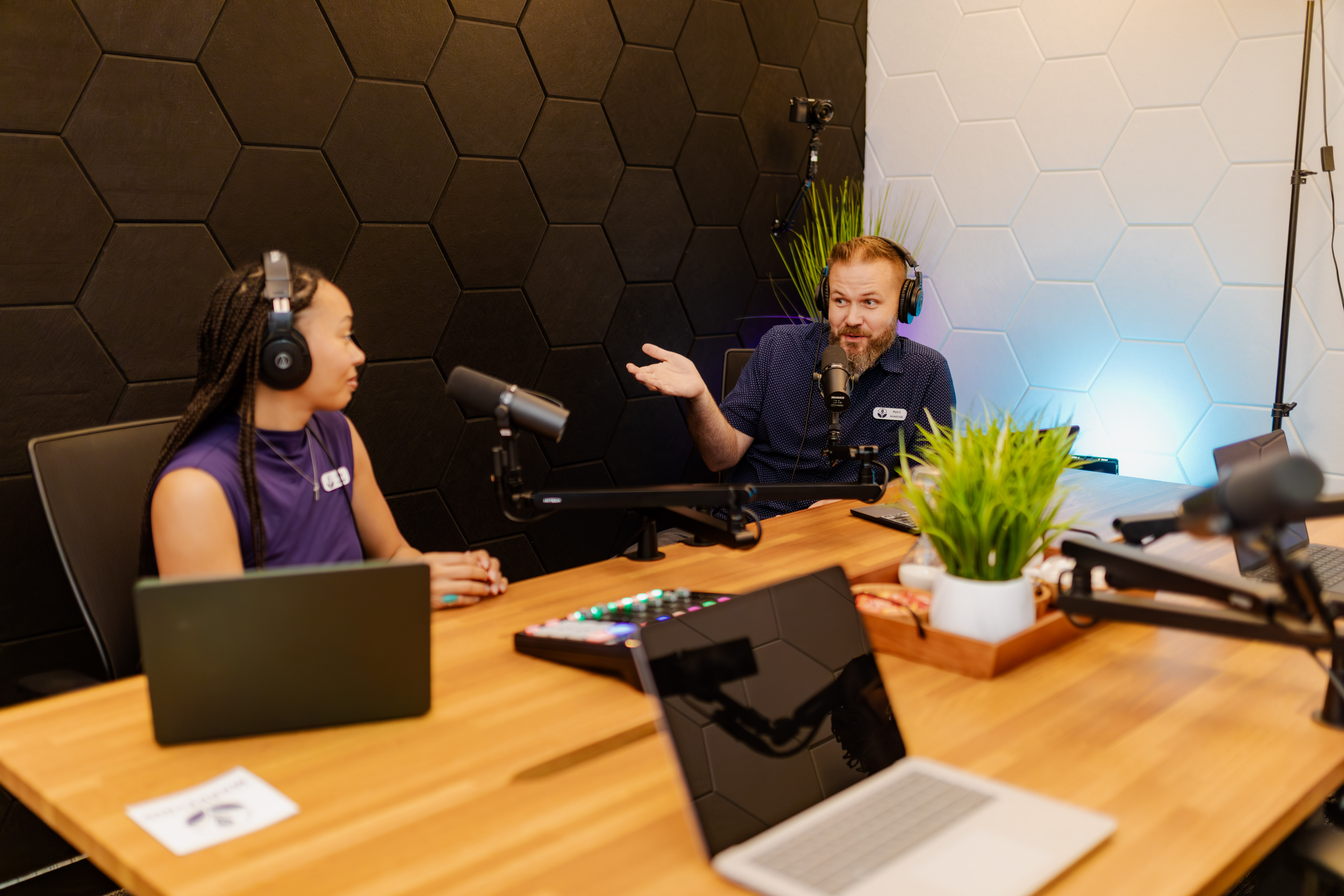
One episode is rarely just one piece of content. The full conversation becomes a long-form video and a podcast episode. The best moments become short clips for social. The transcript becomes a blog article with its own headers, schema, and author credit. Each version is shaped for a different place a person or an AI might find you. That is how a single recording session quietly builds presence across search, social, and answer engines at the same time.
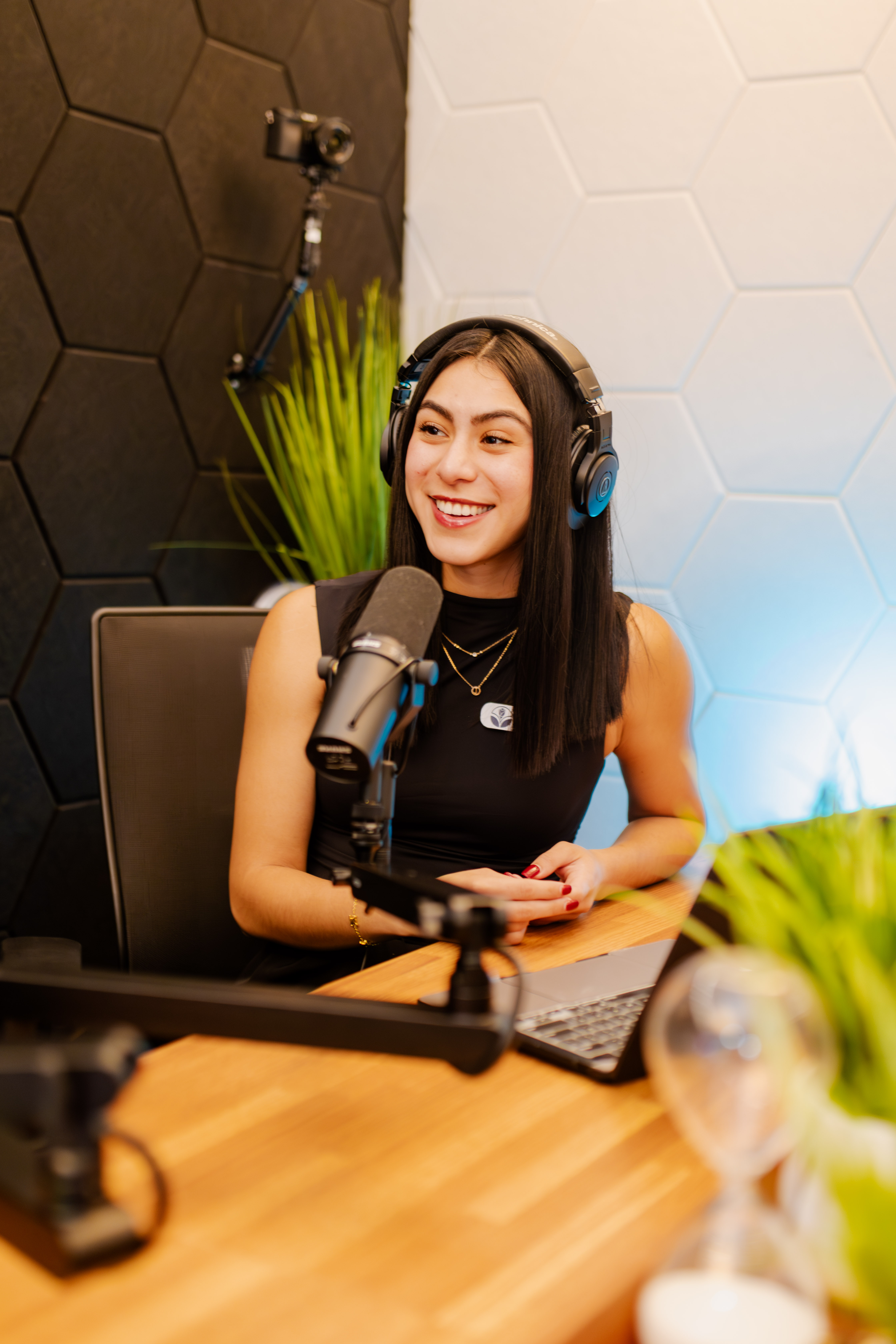
The production quality matters more than people expect. Clean audio, sharp video, and a real studio are not vanity — they are what make the content worth sharing, embedding, and quoting. Polished episodes get picked up. Picked-up episodes earn the outside mentions and links that off-page authority is made of.

Directories, citations, and community
Beyond your own channels, you want to appear in the places people and AI tools already trust. Industry directories list you where buyers are already looking. Consistent citations — your name, address, and phone, repeated accurately across the web — reinforce that you are real. And community spaces like Reddit, where people ask each other for recommendations, are exactly the kind of third-party mention AI tools weigh heavily when they decide who to cite. These signals are slow to build and hard to fake, which is precisely why they carry weight.
How Peachtree Rose Marketing ties it all together
None of these pieces wins alone. A great website with no off-page authority stays invisible. A loud social presence pointing at a thin website converts no one. The result comes from connecting all of it into one system that search engines and AI tools can trust from every angle. We build to a simple standard:
Read by humans. Ranked by search. Cited by AI.
That is not a slogan we bolt on at the end. It is the test every page has to pass before it ships — what we call the Triple-Read Build. Each piece of content is built to clear three readers at once.
Read by humans
Clear, plain, and genuinely useful to the person it is written for — because nothing else matters if a real customer bounces.
Ranked by search
Structured, fast, and tuned so Google understands it and ranks it for the searches that bring you customers.
Cited by AI
Shaped and marked up so answer engines can lift it cleanly and name you as the trusted source.
The on-page work and the off-page work both feed this. Your website and content pass the three reads. Your Google Business Profile, social presence, podcast, and directory listings tell every engine the same consistent story about who you are. When the page and the proof line up, search engines rank you and AI tools cite you — for the same reason a person would: you are clearly the real, trustworthy answer.
How to start
You do not have to do everything at once. You build it in order, because each layer makes the next one work harder.
- Fix the foundation. Make sure your website is fast, clear, and answers your customers' real questions in plain language.
- Add the markup. Wire in business, author, article, and FAQ schema so machines read you without guessing.
- Verify your Google Business Profile. Get the listing live, accurate, and active — then start earning honest reviews.
- Line up your profiles. Make your name, address, and phone match everywhere they appear online.
- Build authority over time. Publish expert content, launch or appear on a podcast, and earn the outside mentions that compound.
If that sounds like a lot to run on your own, that is what we do. We connect your website, your map listing, your social profiles, and your content into one system built to be read by humans, ranked by search, and cited by AI. If you want to see where you stand today, we will start with a look at your current visibility.
Frequently asked questions
What is the difference between SEO and AEO?
SEO (Search Engine Optimization) helps your website rank in search engines like Google, so people can find and click your link. AEO (Answer Engine Optimization) helps AI tools like ChatGPT, Gemini, and Google's AI answers find, trust, and quote your business in their responses. SEO earns a click; AEO earns a mention.
Do I need both SEO and AEO, or can I pick one?
You need both. People still search Google, and people increasingly ask AI tools for recommendations. Winning only one means missing half your potential customers. The work overlaps heavily, so doing both together is more efficient than it sounds — strong SEO gives AI a trusted site to read, and strong AEO makes that site clearer for humans too.
Is AEO replacing SEO?
No. AEO sits on top of SEO; it does not replace it. AI answer engines read the same web that search engines rank, so a healthy, well-ranked site is the foundation an AI relies on to cite you. Think of AEO as adding a second way to be found, not trading the first one away.
What is E-E-A-T and why does it matter for AI visibility?
E-E-A-T stands for Experience, Expertise, Authoritativeness, and Trustworthiness. It is how Google judges whether a real, qualified person stands behind your content, and AI tools weigh the same thing when deciding whose words to trust. Naming a real author with real credentials, backed by author and article schema, makes both search engines and AI tools trust your content more.
What is schema markup and do I really need it?
Schema markup, also called structured data, is hidden code that labels what your page is about in a format machines prefer — your business details, your author, your hours, and the questions and answers on the page. It does not change what visitors see, but it removes guesswork for the engine summarizing you. For AEO it is one of the highest-leverage things you can add.
How does a Google Business Profile help with AI search?
A verified Google Business Profile is a trusted, consistent record of who you are and where you are. That is exactly the kind of signal AI answer engines lean on when they decide which local business to name. The same listing that earns map and local-pack traffic also makes you citable, so your verified profile works for both SEO and AEO at once.
How does podcasting help my search and AI visibility?
A podcast produces a steady stream of content and earns mentions and links from guests and listeners, which builds the off-page authority both search engines and AI tools reward. One episode also becomes many assets — video, audio, clips, and a written article with its own schema — so a single recording spreads your presence across search, social, and answer engines at the same time.
How long does SEO and AEO take to show results?
Technical fixes and a verified Google Business Profile can help within weeks. The authority signals — content, reviews, podcasting, and outside mentions — compound over months, which is exactly why they are hard for competitors to copy quickly. The honest answer is that it builds steadily and then accelerates as the pieces start reinforcing each other.